
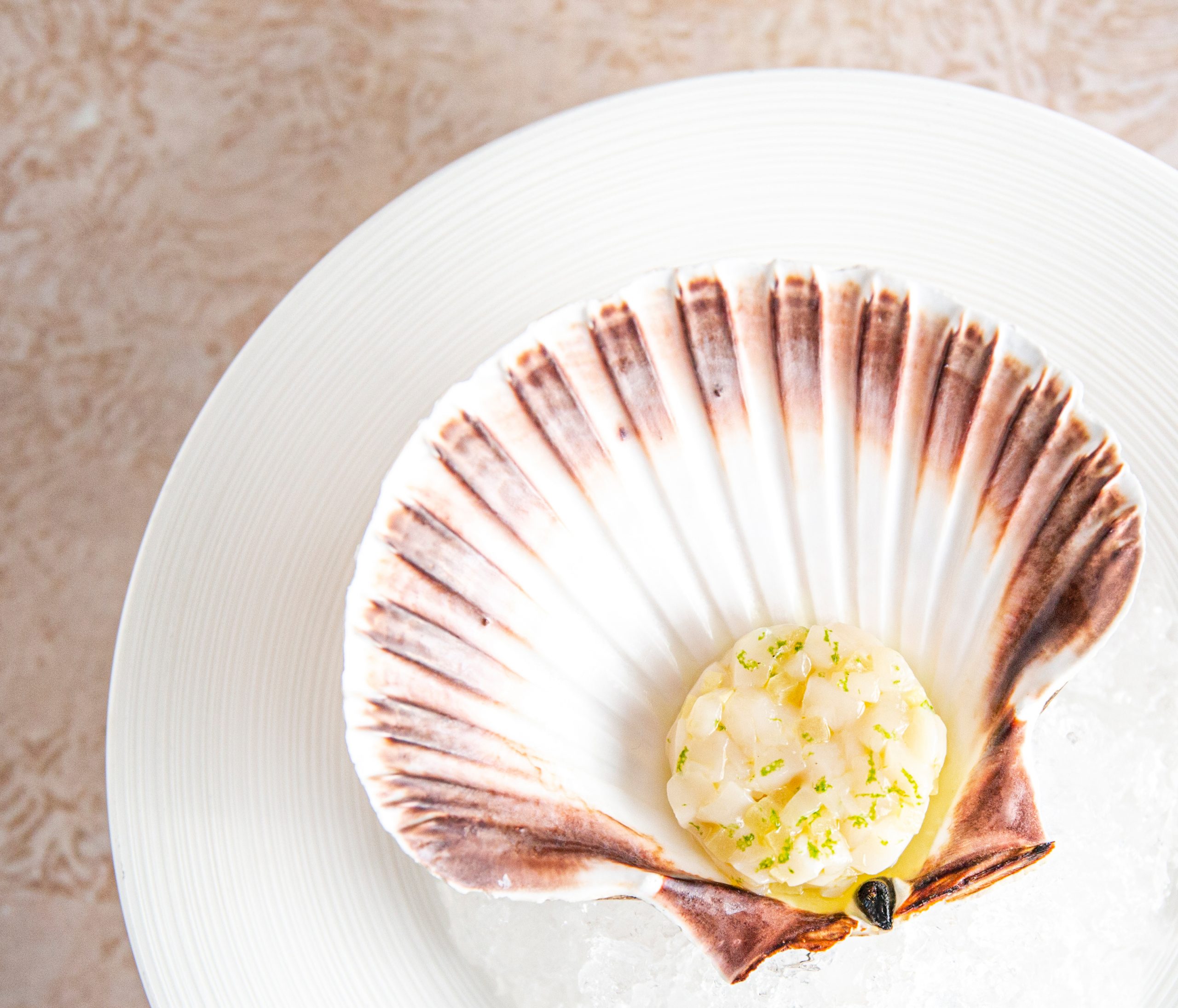
Did you know that dimming the lights in a restaurant can actually compromise the flavour and the taste of food for the person dining and experiencing it?
According to a study by Dutch researchers from Maastricht University in the Netherlands, who looked at the influence of two differing levels of ambient light on ‘taste intensity’ experienced by eaters in a restaurant, this is a real thing!

They presented the first course as a ‘new dish’ on their menu. Unbeknown to the diners it was actually a dish that was part of experiment. There were two sets of diners. The first set dined in dimmed light, what some would say a ‘romantic light’. The other group of diners dined in bright ambient light.
In their feedback, the diners who dined in the brighter light perceived the overall taste and flavour of the dish to be more intense when compared to those dining under dimmed light.
“The results thus show that modifying the ambient illuminance level in a restaurant does not only affect the overall ambience but also changes the overall taste experience of the food being served.”
“Guests dining in a brightly lit restaurant perceive the overall taste of a dish – created for the purpose of the study – to be more intense than guests dining in a dimly lit restaurant.”
Dutch Research Team – Maastricht University

This goes a long way in proving the theory that you eat with your eyes. Its a phrase I use all the time when explaining the value of excellent food photography.
And its why when working with the super chefs of today I totally understand the attention to detail and why I pick up on and showcase those tiny details in my food photography often through macro photography.
Charles Smith at Lords of the Manor is a master of creating dishes that taste incredible and also look like pieces of art and sculpture.

And this is why is makes total sense when you’re designing and planning your restaurant lighting, that its as important as the plates of food you serve.

Indeed. What about mood lighting or romantic lighting?
The lower light of course makes diners linger for longer and relax which are key ingredients (forgive the pun) for a romantic evening. Yet how does the lower lighting in a restaurant impact on the diner’s perception of taste and therefore overall enjoyment of the food served and likelihood of repeat business?
The afore mentioned Dutch research team looked into this and ran a study based on hosting nearly 140 diners in a fine dining restaurant over a full evening service. They used overhead pendant lamps with a low wattage to give off a low light ambience.
The diners then gave a rating of the perceived overall taste intensity of the dish on a nine-point scale. The scale ran from ranging from ‘not intense’ to ‘extremely intense’. There was also a ‘pleasantness scale rated from one to six. The ambient lighting was also rated at the same scale.

And whilst the results showed that there was no significant difference in the perceived pleasantness of the two research lighting conditions, they did find that there was a perceived difference in the perceived intensity of the smell of the food.
The Research Team noted: “This finding is not only theoretically relevant for research on multisensory integration, but it also provides tools for taste modulation, and, as such, for strategies to decrease salt and sugar consumption among diners.”.
I’m looking forward to future research that will help to explain why this happens and what is going on in our brains to make us think this way. However, the oft repeated phrase “you eat with your eyes” would appear to be a proven thing! And that’s why beautifully lit food portraiture will not only sell your exquisite foodie creations but bring your customers back time and time and time again.

All of the above images were photographed on location at Lords of the Manor and created by Head Chef Charles Smith for Atrium.